

Why SMEs in Australia Need Digital Time Tracking
Small and medium-sized enterprises across Australia are facing increasing pressure to manage workforce operations efficiently. Rising compliance requirements, remote work arrangements, and payroll accuracy expectations have made manual attendance methods outdated and
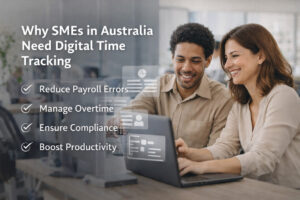
risky.For many SMEs, spreadsheets and manual timesheets are still common. However, these systems often lead to payroll miscalculations, overtime disputes, and compliance concerns. In 2026, digital solutions are no longer optional—they are essential for sustainable growth.
Time tracking has evolved from a basic attendance tool into a strategic workforce management function that supports accuracy, transparency, and operational control.
The Compliance Landscape for Australian SMEs
Australia has strict employment regulations under Fair Work legislation. Employers must maintain accurate records of working hours, overtime, and leave balances. Even minor payroll discrepancies can result in penalties, audits, or employee disputes.
Manual processes increase the risk of incorrect calculations, especially when managing shift workers or part-time staff. Digital systems automatically record working hours, store historical logs, and generate audit-ready reports.
By implementing structured time tracking, SMEs can reduce compliance risks and protect their business reputation.
Payroll Accuracy, Overtime Control, and Time Off in Lieu
Payroll errors are one of the most common challenges for growing businesses. Incorrect overtime payments, missed allowances, or inaccurate leave calculations can quickly damage employee trust.
Digital attendance systems integrate working hours directly with payroll modules. This ensures salaries reflect actual logged time rather than estimated hours. Automated calculations also reduce administrative workload and eliminate repetitive reconciliation tasks.
In the Australian workforce, Time Off in Lieu (TOIL) is an increasingly important practice, allowing employees to take paid time off instead of receiving overtime pay. Managing TOIL manually can be complex, often leading to tracking errors, unused balances, or compliance risks.
- Digital time tracking systems simplify TOIL management by automatically:
- Recording eligible overtime hours
- Converting overtime into TOIL balances based on company policy
- Tracking accrual and utilization in real time
- Ensuring compliance with workplace agreements and regulations
- This structured approach ensures that both payroll and leave entitlements remain accurate and transparent.
For SMEs operating on tight margins, financial accuracy is critical. Time tracking—combined with effective TOIL management—ensures payroll precision without increasing HR complexity.
Improving Workforce Visibility
As hybrid and remote work become more common in Australia, visibility into employee working hours has become more complex. Business owners need real-time insights without micromanaging teams.
Digital systems provide dashboards that display attendance patterns, late arrivals, absenteeism trends, and overtime distribution. Managers can make data-driven decisions instead of relying on assumptions.
Improved visibility leads to better workforce planning and stronger operational control.
Reducing Administrative Burden for HR Teams
SMEs often operate with lean HR teams. Administrative efficiency is essential to maintain productivity.
Manual timesheet approvals, data entry, and payroll adjustments consume valuable time. Automation reduces these repetitive tasks by recording hours digitally, validating anomalies, and generating structured reports instantly.
Time tracking systems streamline approvals and centralize attendance data, allowing HR teams to focus on strategic growth initiatives rather than paperwork.
Supporting Fairness and Transparency
Employee trust is built on transparency. When attendance and overtime calculations are unclear, disputes can arise.
Digital systems create clear records of clock-in and clock-out times, approved leave, and overtime hours. Employees can access their data through self-service portals, improving confidence in payroll accuracy.
Transparent time tracking fosters a culture of accountability and fairness across the organization.
Scalability for Growing Businesses
As SMEs expand, workforce complexity increases. New hires, multiple shifts, and additional locations require structured systems.
Manual attendance methods that worked for a 10-person team may fail when the workforce doubles or triples. Digital platforms scale alongside business growth, ensuring consistency across departments and locations.
Investing early in structured time tracking prevents operational disruption later.
Integration with Broader Workforce Management
Attendance data does not operate in isolation. It connects directly to payroll, leave management, performance evaluation, and compliance reporting.
Integrated HR platforms allow businesses to manage these functions within one ecosystem. Instead of exporting spreadsheets between tools, SMEs can centralize operations and reduce data inconsistencies.
SmartHCM supports Australian SMEs by combining digital attendance management, payroll integration, leave tracking, and compliance-ready reporting within a unified system. This approach simplifies workforce operations while maintaining regulatory alignment.
Future-Proofing SME Operations in 2026
Technology adoption is no longer limited to large enterprises. SMEs must compete in a fast-moving business environment where efficiency and compliance are non-negotiable.
Digital solutions improve operational clarity, financial accuracy, and employee satisfaction. Time tracking plays a foundational role in this transformation by ensuring working hours are recorded, validated, and aligned with payroll systems.
Businesses that modernize early gain a competitive advantage in productivity and risk management.
Final Takeaways
Australian SMEs face growing workforce management challenges, from payroll compliance to remote work visibility. Manual attendance systems increase administrative strain and financial risk.
Implementing digital time tracking improves payroll accuracy, enhances transparency, reduces HR workload, and supports Fair Work compliance. It also prepares businesses for sustainable growth in 2026 and beyond.
With integrated solutions like SmartHCM, SMEs can manage attendance, payroll, and workforce data efficiently without operational complexity.

References
Fair Work Ombudsman – Record Keeping and Pay Requirements
Australian Government Business – Workplace Compliance
Deloitte Australia – Workforce Transformation Insights
Gartner – HR Technology Trends
World Economic Forum – Future of Work