 Arabic
  English

Contents
- 1 Managing Workforce Changes Efficiently During Ramadan
- 1.1 Auto-Adjust Late-In Rules for Suhoor
- 1.2 Enable Flexible Shift Scheduling Without Disrupting Payroll
- 1.3 Send Custom Ramadan Mubarak Notifications Through the HR App
- 1.4 Automate Zakat Payroll Deductions for CSR Initiatives
- 1.5 Digitally Manage Prayer Room Booking
- 1.6 Adjust Performance Tracking for Shifted Hours
- 1.7 Centralize All Temporary Policy Adjustments in One Platform
- 2 Why Automation Matters During Ramadan
- ٣ Final Takeaways
- 4 References
Managing Workforce Changes Efficiently During Ramadan

Ramadan introduces meaningful operational changes inside organizations. Working hours shift, employee routines adjust, and attendance patterns evolve. While the holy month is spiritually significant, it also requires thoughtful workforce management to maintain productivity and fairness.
For HR teams, this period can either create administrative pressure or become an opportunity to improve efficiency through automation. Instead of manually managing exceptions, approvals, and payroll adjustments, organizations can use structured systems to adapt workflows smoothly.
Here are seven practical and automation strategies that help HR teams manage Ramadan efficiently while supporting employee well-being.
Auto-Adjust Late-In Rules for Suhoor
Pre-dawn meals naturally affect sleep cycles, which may influence morning arrival times. Rather than manually reviewing each late-in case, HR departments can configure temporary attendance rules that automatically extend grace periods or adjust official start times.
Automating attendance flexibility ensures fairness across teams while maintaining transparency. Employees understand expectations clearly, and HR avoids repetitive exception approvals. More importantly, digital attendance tracking keeps payroll calculations accurate even when start times shift during this month.
By embedding temporary policy adjustments directly into the system, organizations eliminate confusion and reduce administrative strain.
Enable Flexible Shift Scheduling Without Disrupting Payroll
Energy levels and productivity patterns may vary throughout the holy month. Some employees prefer earlier shifts, while others perform better later in the day.
Structured shift automation allows HR to temporarily reassign schedules without affecting salary calculations or overtime tracking. Instead of manually recalculating hours, automated systems adjust working time configurations while keeping compliance intact.
This flexibility improves morale and maintains performance standards. It also ensures that workforce distribution remains balanced across departments without operational disruption.
Send Custom Ramadan Mubarak Notifications Through the HR App
Clear communication becomes even more important during Ramadan. Employees need visibility into adjusted working hours, policy changes, and internal initiatives.
Mobile HR applications allow organizations to send automated notifications such as:
• Ramadan Mubarak greetings
• Updated attendance guidelines
• CSR initiatives
• Wellness reminders
Centralized communication strengthens engagement while preventing misinformation. Rather than relying on scattered email chains, HR can deliver consistent updates across the organization instantly.
Automated notifications also reinforce cultural awareness and demonstrate organizational support during the holy month.
Automate Zakat Payroll Deductions for CSR Initiatives
Corporate social responsibility initiatives often increase during this month, especially those related to charitable giving.
Instead of manually processing voluntary deductions, payroll systems can allow employees to opt into automated zakat contributions. This approach ensures:
• Accurate deduction calculations
• Transparent reporting
• Proper documentation
• Timely disbursement
Automation removes payroll complexity while supporting meaningful CSR engagement. Employees gain confidence that their contributions are managed responsibly, and HR teams reduce manual reconciliation work.
Digitally Manage Prayer Room Booking
Shared prayer facilities often require structured coordination during Ramadan. Informal booking methods can lead to scheduling conflicts and overcrowding.
Facility management modules within HR systems enable organized prayer room scheduling. Employees can reserve time slots digitally, while administrators maintain oversight of capacity and availability.
This structured approach ensures respectful access and reduces coordination challenges. It also provides real-time visibility into facility usage without requiring manual oversight.
Adjust Performance Tracking for Shifted Hours
Standard productivity metrics may not fully reflect output during altered schedules. Reduced working hours or flexible shifts require contextual evaluation.
Automated performance management systems allow temporary KPI adjustments aligned with modified schedules. Rather than penalizing employees for structural changes, organizations can evaluate performance fairly based on revised expectations.
According to Harvard Business Review, contextual performance evaluation strengthens employee trust and engagement during transitional periods. By integrating performance tracking into digital systems, organizations ensure consistency and transparency throughout this month.
Centralize All Temporary Policy Adjustments in One Platform
During Ramadan, multiple HR elements may change simultaneously—attendance rules, payroll deductions, scheduling patterns, facility management, and communication workflows.
Managing these changes across disconnected tools increases the risk of errors and inconsistencies. Centralized HR platforms allow organizations to configure temporary policies once and apply them consistently across all modules.
سمارت اتش سي ام provides this integrated environment by combining attendance management, payroll automation, workforce scheduling, mobile notifications, facility coordination, and performance tracking within a unified system.
Instead of reacting daily to exceptions, HR teams can:
• Configure temporary attendance policies
• Enable voluntary payroll deductions
• Send structured mobile notifications
• Manage facility scheduling digitally
• Monitor workforce performance accurately
Once the holy month concludes, settings can be reverted efficiently without disrupting operational continuity.
This integrated automation framework ensures organizations maintain both cultural sensitivity and operational stability.
Why Automation Matters During Ramadan
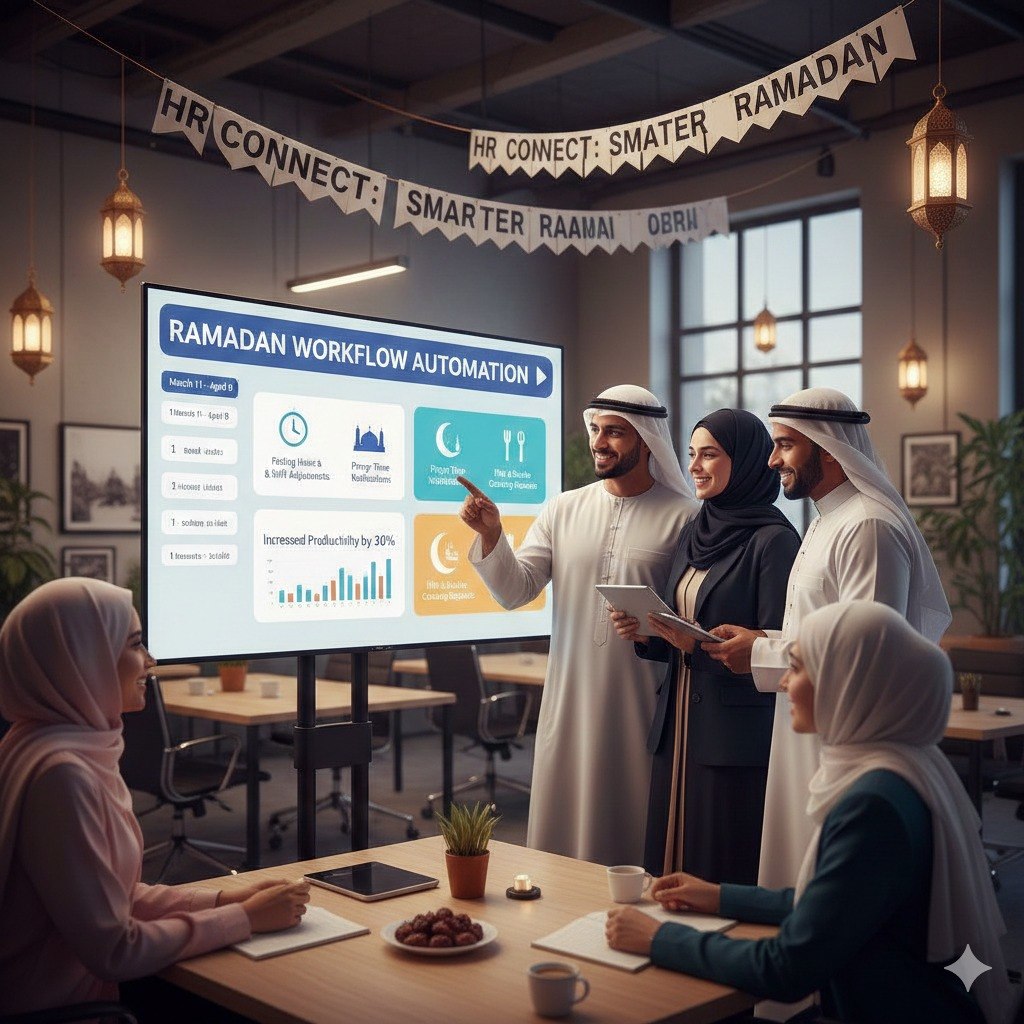
Ramadan is not only a spiritual period but also a time when workforce expectations shift. Employees value flexibility, clarity, and respect for their routines.
Automation helps organizations respond consistently rather than reactively. By embedding flexibility into systems instead of handling changes manually, HR teams preserve efficiency while supporting employee well-being.
From attendance tracking to payroll management, automation transforms seasonal adjustments into structured workflows rather than administrative burdens.
Final Takeaways
Managing workforce operations during the holy month requires preparation, flexibility, and clarity. Manual processes create unnecessary workload and increase the risk of inconsistencies.
Automating key workflows—attendance rules, payroll deductions, shift scheduling, performance tracking, communication, and facility booking—ensures operational stability without sacrificing employee support.
With integrated systems like SmartHCM, organizations can adapt to Ramadan efficiently while maintaining accuracy, transparency, and compliance.
When processes are automated thoughtfully, this month becomes an opportunity to demonstrate organizational agility and cultural awareness rather than operational strain.
References
Harvard Business Review – Performance Management Insights
Society for Human Resource Management (SHRM) – Flexible Workforce Policies
Deloitte – Human Capital Trends
Gartner – Workforce Technology Research
World Economic Forum – Workplace Transformation Reports



